








































































Zurich Financial Services Group - and a strategic approach to coaching

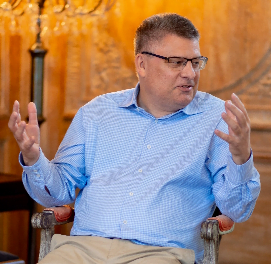
“Coaching has gone from an intangible development activity into an effective business-driven development initiative."
Damion Wonfor, Zurich Financial Services Group
About Zurich Financial Services Group
Zurich Financial Services Group (Zurich) is an insurance-based financial services firm with approximately 60,000 employees serving customers in more than 170 countries.
In 2008 Zurich reported a Gross Written Premium of £2,097 million, delivering its 24th consecutive quarter of profitability despite the exceptional volatility of the global financial markets.
The challenge
Damion Wonfor, Talent Management and Development Consultant, was given responsibility for managing Zurich’s UK coaching provision in late 2006. In common with many other large companies, Zurich had a scattergun approach to coaching, giving relative autonomy to a large pool of coaches who had mostly been hired through personal recommendation. Damion began to develop concerns over the capability of some of the coaches, and to question whether every supplier they used was suited to the fast-paced high-change environment of Zurich Financial Services.
At roughly the same time, Zurich’s annual coaching spend increased considerably and senior executives began to question whether they were receiving sufficient returns for their considerable investment. This gave Damion added internal support to start a new project – creating and applying a coaching strategy for Zurich that would ensure all coaching was quality-assured and delivered tangible business results.
The Performance Coach
One of Damion's key concerns was that, by changing the coaching system, he might disrupt coaching relationships that had been developed over many years. As a result, he decided that he needed an external provider for the project. This would both give him a key ally and ensure impartiality in the eyes of external coaches. He looked at a number of providers and chose The Performance Coach, based on their past record of delivering similar work with other high-profile clients and their extensive knowledge of coaching assessment standards.
Programme design
The Performance Coach worked with Damion to set up a comprehensive Strategic Coaching Framework. Decisions were based on a careful analysis of Zurich's coaching processes and business needs, together with best practice from other top companies. The Strategic Coaching Framework set out new standards for coaching within Zurich, including:
- a far more rigorous process for selecting and matching coaches
- a priority system to focus coaching where it could make the biggest difference
- tailored coaching competencies that gave Zurich a unique coaching approach
- a commitment to bring line managers into coach contracting and review conversations
- a metrics system for measuring coaching to ensure it moved business goals forwards
The new Strategic Coaching Framework was well received internally, but Damion felt that implementing the framework could be more problematical.
The assessment centre
The most sensitive area of implementing the Strategic Coaching Framework was assessing the existing pool of coaches. Zurich had some fifty UK coaches, many of whom had long established relationships with the firm. Both Damion and The Performance Coach were mindful of wanting assessment to be constructive for them.
The first step was an application process that pruned out coaches who were not committed to the assessment, or who lacked qualifications in a field relevant to coaching. This reduced the pool of coaches to 32 individuals. Afterwards, The Performance Coach helped to set up a temporary assessment centre where six coaches could be assessed each day.
At the assessment centre, coaches were asked to undertake three tasks:
- A half-hour presentation on their coaching approach.
- A twenty-five minute interview with an Occupational Psychologist.
- An hour-long coaching session which was observed remotely, considered alongside self-assessment from the coach and feedback by the coachee.
In order to minimise waiting time for the coaches, the whole assessment was grouped into a tight two-hour block. At the end, coaches were scored on the three tasks by three separate panels made up of top HR professionals and coaches. Then the three scores were triangulated to create an overall mark. Each coach was given a detailed feedback report about their strengths and weaknesses; several coaches who did not pass said that the process had nonetheless been useful to them.
Out of thirty-two coaches, twelve were selected to continue working with Zurich. For Damion Wonfor, the day was a resounding success. Though he had been surprised at the varying standards in coaching demonstrated, he now felt confident that Zurich had a pool of highly competent coaches who were suited to its business culture.
New coaching standards
Elsewhere, the changes brought about by the Strategic Coaching Framework were simple to put in place. Now that Zurich had a better picture of each coach, the process of matching coaches to staff became far simpler and more effective. They were also able to ensure that the most skilled coaches were focused on areas that were most critical to business performance. Likewise, the procurement process became easier with a simple fee structure based on tiers of coaching skill, and standardised contracts that set out cancellation and postponement charges.
The results
For Damion Wonfor, the biggest difference that the project made was to the reputation of coaching within Zurich. Beforehand, coaching was seen as something that happened behind closed doors, and questions were being asked about the results gained. Now, all coaching programmes have performance goals that are shared with line managers. Metrics record the percentage of goals achieved overall and link them to objective benchmarks. As a result, management no longer raise questions about whether the company's coaching spend is effective. Confidence in Zurich’s coaching is at an all-time high.